

In today’s digital world, managing money has become faster, easier, and more convenient than ever before.
With just a few taps on a phone, people can transfer funds, pay bills, shop online, and monitor their accounts in real time.
But this convenience has also introduced a new kind of risk — one that is growing quietly, and affecting more people than most realize.
Digital payment scams are increasing.
And what makes them dangerous is not just the technology behind them — it’s how normal they feel.
How These Scams Usually Begin
Most financial scams today do not start with something obviously suspicious.
They start with something that looks familiar.
A message.
A notification.
An alert.
It might appear to come from a bank, a payment app, or a trusted service.
The message often includes:
- A warning about suspicious activity
- A request to verify account details
- A notification about a failed transaction
At first glance, everything looks real.
The logo is correct.
The language feels professional.
And the situation creates urgency.
The Moment That Changes Everything
The critical moment happens when the user takes action.
This usually involves clicking a link or entering personal information.
The page that opens often looks identical to an official website.
It is designed to build trust.
But in reality, it is controlled by scammers.
Once details are entered, access is given away.
And from that point, things can move very quickly.
Why These Scams Are Becoming More Advanced
In the past, scams were easier to identify.
They contained errors.
They looked unprofessional.
They raised suspicion.
But today, scammers are using more advanced methods.
They understand how real systems work.
They replicate design, tone, and timing.
This makes detection much harder.
Even cautious users can be caught off guard.
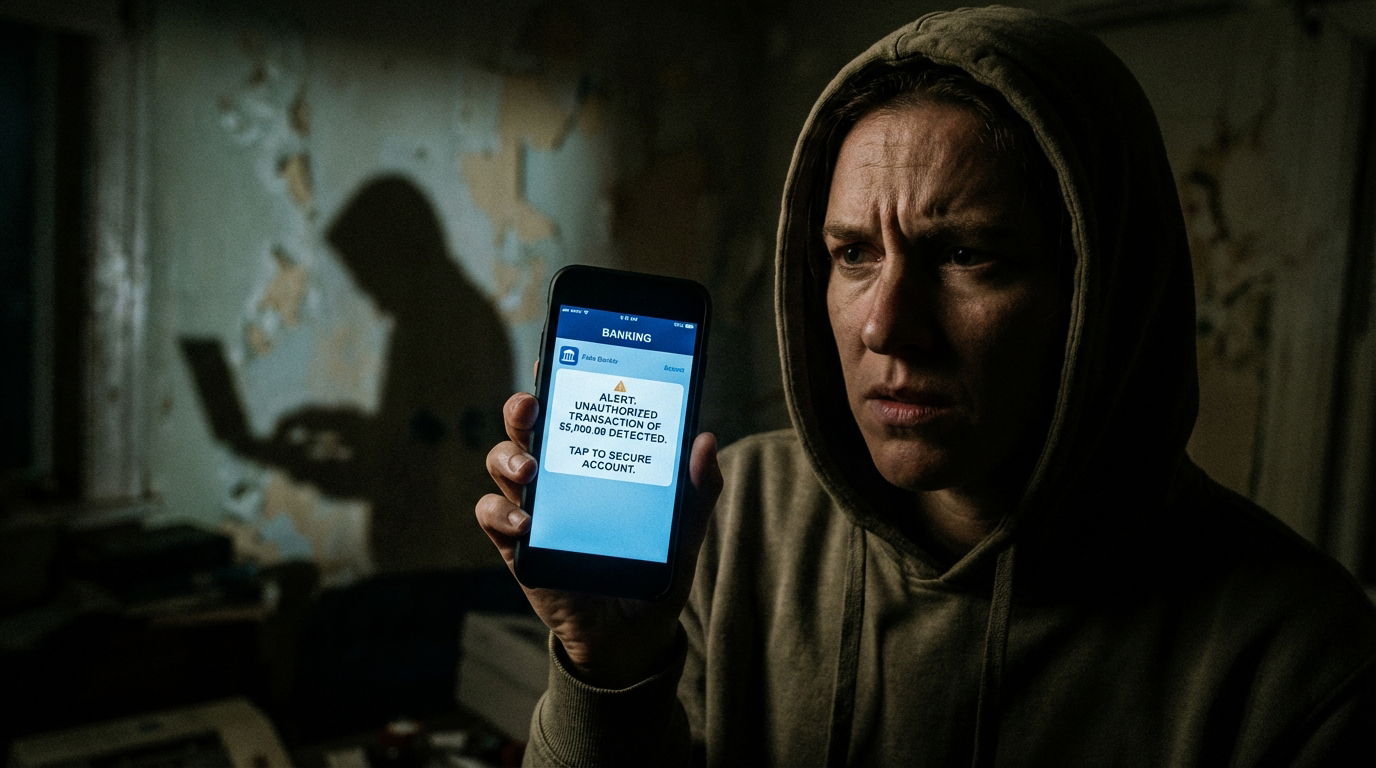
The Psychological Factor Behind It
One of the biggest reasons these scams succeed is psychology.
Scammers do not rely only on technology.
They rely on human behavior.
They create situations that trigger:
- Fear (your account is at risk)
- Urgency (act immediately)
- Trust (familiar branding)
When people experience urgency and fear together, they are more likely to act quickly.
And quick decisions often lead to mistakes.
The Financial Impact
Unlike traditional forms of fraud, digital scams operate at high speed.
Money can be transferred within minutes.
In many cases:
- Unauthorized transactions happen quickly
- Accounts are drained before the issue is noticed
- Recovery becomes difficult
This makes prevention far more important than reaction.
Why This Problem Is Growing
Several factors are contributing to the rise in digital scams:
- Increased Digital Adoption
More people are using online banking and payment systems than ever before. - Faster Transactions
Modern payment systems allow instant transfers, which reduces the time available to stop fraud. - Greater Data Exposure
People share more information online, increasing vulnerability.
These factors create an environment where scams can spread more easily.
Real-World Behavior Is Changing
As awareness of these scams increases, people are starting to change how they interact with digital systems.
Some are becoming more cautious.
Others are verifying information more carefully.
But at the same time, scammers are also evolving.
This creates a constant cycle.
What Financial Experts Recommend
Experts suggest a few simple but effective precautions:
- Always access accounts through official apps or websites
- Avoid clicking on links from messages
- Take a moment before responding to urgent alerts
- Verify information through trusted sources
These steps may seem basic.
But they are often enough to prevent most scams.
The Bigger Financial Lesson
This situation highlights a broader truth about money in the digital age.
Managing money is no longer just about earning and saving.
It is also about protection.
Understanding risks has become just as important as understanding opportunities.
Final Thought
In many cases, financial loss does not come from a big mistake.
It comes from a small moment of trust.
A single click.
A quick decision.
A brief lapse in awareness.
And that is what makes digital scams so dangerous.
Because they don’t feel like threats.
They feel like normal actions — until it’s too late.